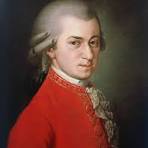
In The Mozart Compendium: A Guide to Mozart’s Life and Music (1990), edited by Howard Chandler Robbins Landon (1926-2009), the author Esther Cavett-Dunsby groups the compositional work of Wolfgang Amadeus Mozart (1756-1791) into four distinct periods.
Mozart’s compositional oeuvre embraced a wide range of styles and forms, examples of which are secular and sacred music, sonatas, serenades, divertimento, solo music, chamber music, concertos, symphonies, vocal music and opera. Because the composer was able to produce works for a whole range of instruments in different forms within a wide emotional range this makes Mozart somewhat unique.
1762-1774 Apprenticeship & Assimilation
Mozart was travelling and performing extensively in Europe and continually assimilating a vast range of diverse musical styles.
1775-1780 Compositional refinement
Mozart was mostly based in Salzburg in the employ of the Archbishop’s court when his work was becoming internationally recognised while composing works to order for his employer.
1781-1788 Productivity & Popularity
Mozart finally moved to Vienna where he forged a freelance career and became a prolific composer in this important period of his life.
1789-1791 Path to a New Style
Mozart’s final period was a time of visionary and experimental works which sadly he was not able to take to its ultimate fruition because of his premature and untimely death.
Comments are closed for this post.